
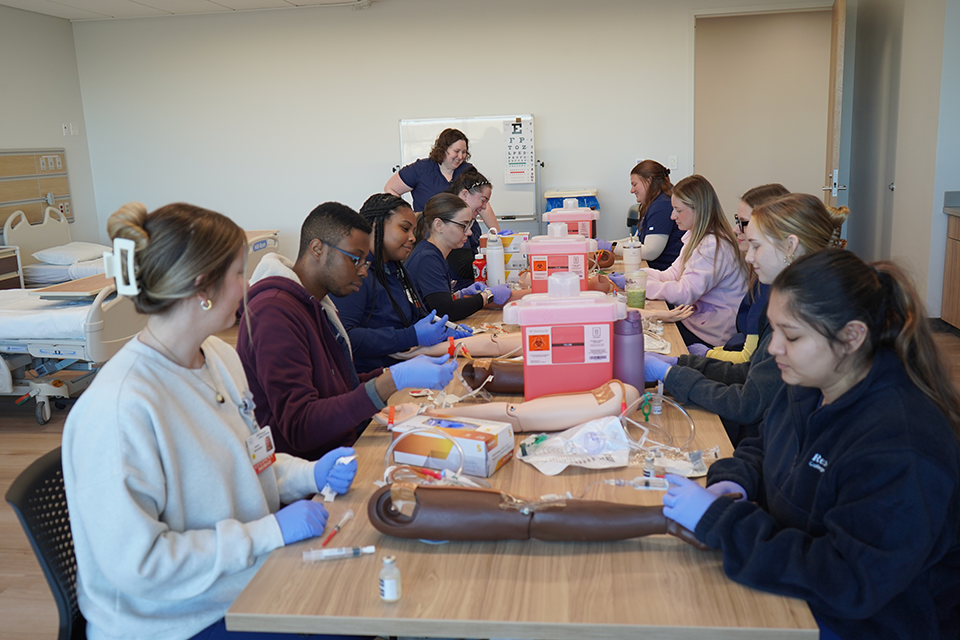
Reimagining Your Future in 12 Months
Transform your existing degree into a nursing career at a premier nursing school with deep roots in the Kansas City community. You’ll join the region’s longest-standing single-purpose nursing community with immediate, high-level access to:
- Exclusive mentorship: Train with the region’s largest Dedicated Education Unit (DEU), featuring one-on-one guidance from nurses across six leading hospitals.
- Premier clinical network: Get hands-on experience through our partnership with HCA Midwest Health, the area’s largest healthcare network.
- Expert guidance: Boost your path to professional practice with support from faculty mentors (many are RCoN alumni) who specialize in your success.
Results That Speak

ABSN Admission Requirements
The ABSN is a high-intensity, 12-month program designed for students who already hold a non-nursing bachelor’s degree.
The program begins each January and May. We recommend starting your application as soon as possible to complete the remaining requirements and secure your seat.
Requirements for Admission:
- Cumulative college GPA of 3.0* or higher
- Completion of all prerequisite courses with a grade of C or better
- ATI TEAS® score at “proficient” level or higher
- Non-nursing bachelor’s degree
*Will accept a cumulative college GPA of 2.8 if it includes a grade of B– or better in Anatomy and Physiology
Transition to Nursing in One Year
Accelerate your career change. The immersive ABSN is designed for people with a non-nursing bachelor’s degree who are ready to get on a direct path to professional practice.
The ABSN offers:
- Direct entry: Begin your journey with a bachelor’s. No prior CNA, LPN, or ADN certifications are needed.
- Intensive 12-month track: Complete three rigorous, full-time terms.
- In-person expertise: Get hands-on experience in patient-centered care under the guidance of faculty experts.
- Professional readiness: Prepare for the NCLEX-RN exam and position yourself as a top candidate for high-earning, competitive nursing jobs.
Is ABSN or Traditional BSN Right for You?
The ABSN is an intensive, 12-month track that begins each January and May. To be eligible, you must hold a non-nursing bachelor’s degree from an accredited college or university.
Are you looking for a nursing degree program that’s not accelerated? Our Traditional BSN (TBSN) may be your ideal path.
Don’t have a bachelor’s degree? The Fast Track could be your quickest option.
Dedicated Education Unit
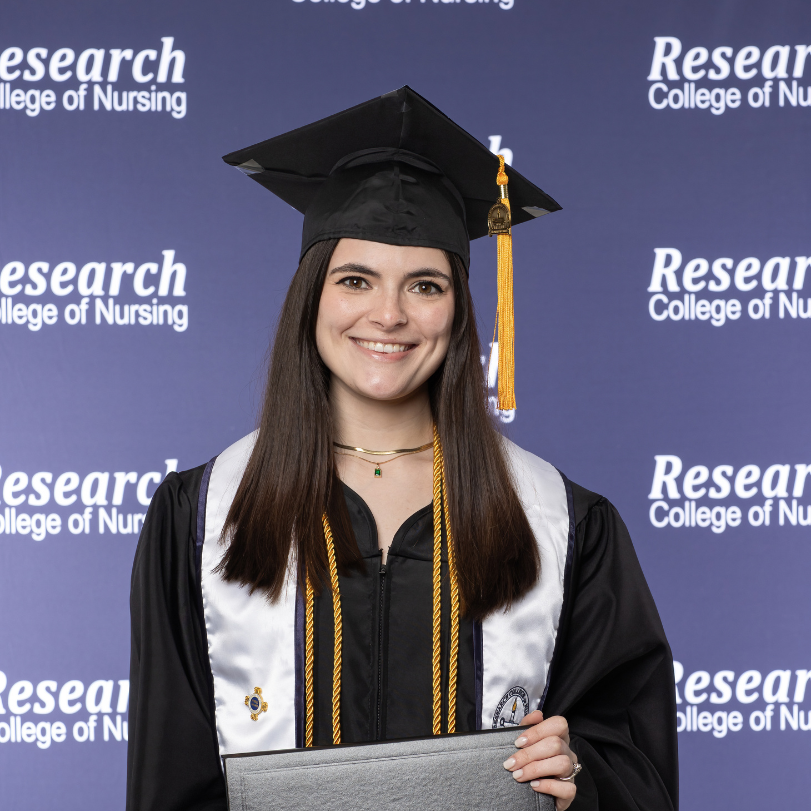
“The faculty is amazing. The simulation opportunities here are super advanced, and the connections you build at HCA are one of a kind. The DEU format is unique and I feel like I am actively being prepared for nursing.”
— Codi Marrs ABSN ’24
Affordable Path to Practice
A premier nursing degree is a realistic investment. RCoN provides unique financial support that helps you focus on your education instead of your bill.
The HCA Midwest Health Work Loan Forgiveness program covers a significant portion of your tuition. This exclusive agreement trades tuition support for a two-year commitment to work as an RN at an HCA facility, starting your career the moment you graduate.
View the estimated costs to earn an ABSN. Note that estimated rates and tuition are subject to change, and loan forgiveness is based upon application completion. To find a full breakdown including support, procedures, and policies visit Tuition & Fees.
| Term 1 | Term 2 | Term 3 | |
|---|---|---|---|
| Tuition | $13,482 | $13,482 | $13,482 |
| Fees | $1,366 | $1,366 | $1,366 |
| HCA Work Loan Forgiveness | ($10,111.50) | ($10,111.50) | ($10,111.50) |
| Your Cost | $4,736.50 | $4,736.50 | $4,736.50 |
Professional Learning Outcomes
For students who began the BSN program prior to August 2026, the curriculum is designed to support the development of strong clinical leaders for modern healthcare practice. Students will:
- Students will provide safe, quality care across the lifespan and in the continuum of healthcare environments.
- Students will demonstrate professional nursing values and standards.
- Students will integrate leadership concepts into clinical practice.
For students who begin the BSN program after August 2026, students will:
- Apply knowledge from nursing and other disciplines as the foundation for professional practice.
- Provide person-centered care across the lifespan to improve health outcomes.
- Support the improvement of equitable population health outcomes.
- Engage in the scholarship of nursing to influence and guide practice decisions.
- Provide safe, quality care across the continuum of healthcare environments.
- Collaborate with professional partners and key stakeholders to optimize healthcare outcomes.
- Support system changes that enhance nursing practice and health outcomes.
- Use information and communication technologies for data supported decision making when planning and providing care.
- Form a professional identify consistent with nursing values and standards.
- Engage in activities that promote personal, professional and leadership development.
Schedule a one-on-one appointment with admissions by phone or in person to review admission requirements, financial aid options, and program details.
Take advantage of our campus tours to see if RCoN’s nursing-focused community is the right fit for you.
Schedule Today!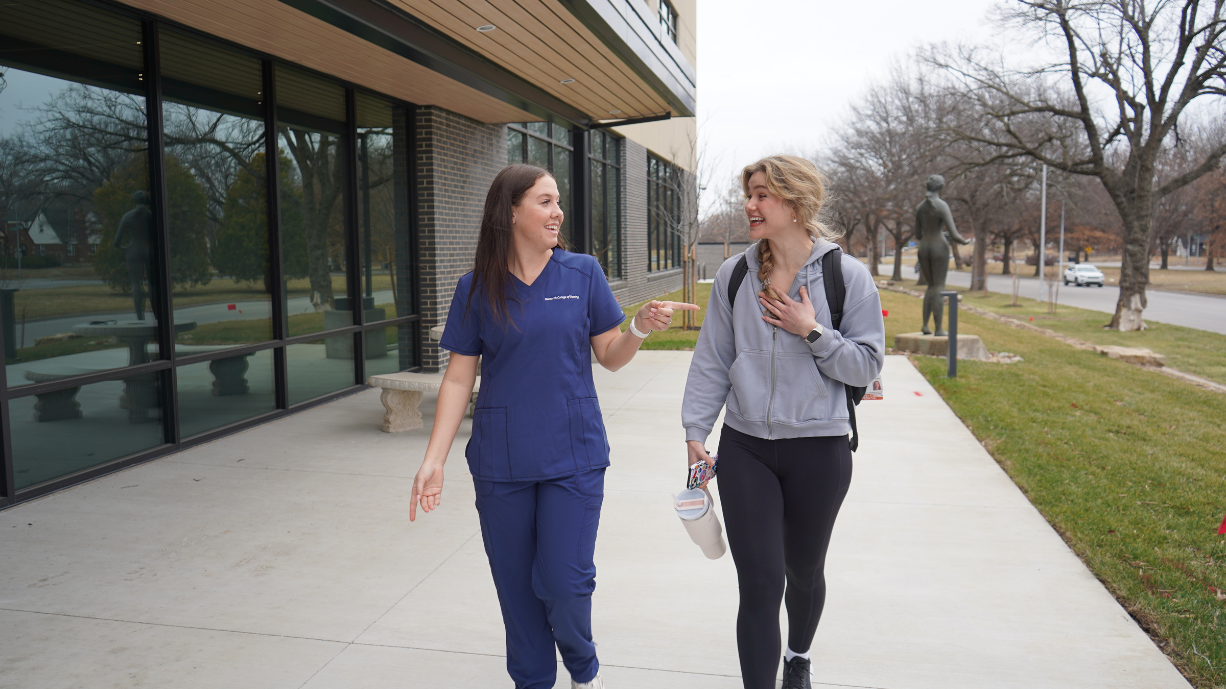
Your Campus and Clinical Experience
-
Facilities & LaboratoriesHands‑On Learning Spaces

-
VisitPlan Your Visit
-
Dedicated Education UnitGet Immersive Training
-
College Catalog & Student HandbookExplore the Catalog & Handbook