
This is important information about preparing for, responding to, and following up after crisis situations on campus. Students, faculty, and staff of Research College of Nursing are expected to review this information.
Introduction
An emergency can occur at any time, suddenly and without warning. Proper planning is essential to minimize the impact of any emergency on people, operations, and facilities at Research College of Nursing. The goal of the Research College of Nursing Emergency Preparedness Plan is to respond to an emergency situation in a safe, effective, and timely manner.
Emergency priorities are as follows:
- Protect life and safety
- Secure critical infrastructure and facilities
- Resume general operations
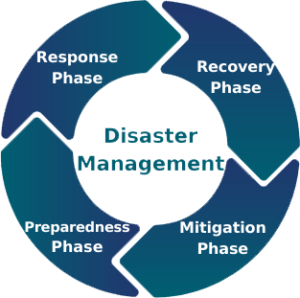
The Emergency Preparedness Plan is designed to provide Research College of Nursing with a management tool to facilitate a timely, effective, efficient, and coordinated response to significant events affecting the campus and/or its population. This plan has been developed utilizing the cycle of disaster management as a guiding tool.
This Emergency Preparedness Plan is predicated on a realistic approach to problems likely to be encountered during a major emergency or disaster. Hence, the following assumptions are made and should be used as general guidelines for such an event:
- An emergency or disaster may occur at any time of the day or night, weekend, or holiday with little to no warning
- The succession of events in an emergency or disaster is not predictable; therefore, published operational plans, this plan included, should serve only as a guide and checklist, and may require modifications in order to meet the requirements of the emergency
- An emergency or disaster may be declared if information is indicated that such conditions are developing or probable
- Disaster may be community-wide; therefore, it is necessary for the College to plan for and carry out disaster response and short-term recovery operations in conjunction with local resources
- Students who reside on campus could be displaced
- Utilities, including gas, water, and electricity could be affected
- Roads and highways to and from the College could be closed affecting normal or even life-sustaining deliveries
- Communication to loved ones could be compromised and the ability to return to homes may be interrupted
- Various departments that are tasked with response and recovery may need to be relocated
Emergency Response team (ERT)
In the event of an emergency, the Emergency Response Team Leader, in consultation with the President, makes the emergency level designation and acts as “Incident Commander” for the emergency response process.
- Level 1: A minor incident that is quickly resolved with internal resources or limited help. The emergency plan is not activated.
- Level 2: A major emergency that impacts sizable portions of the campus and may affect mission-critical functions or life/safety. The emergency plan is activated and the Emergency Response Team (ERT) determines the magnitude of the emergency. An Emergency Operations Center (EOC) may be opened.
- Level 3: A disaster that involves the entire campus and surrounding community. The emergency plan is activated and the entire ERT mobilizes at the EOC. Research College of Nursing will work through the Emergency Response protocol of Research Medical Center for all disaster beyond the boundaries of the College property.
Members of the Emergency Response Team include: President, Vice President of Campus Operations, and the Vice President of Academic Operations. The Emergency Response Team Leader and Incident Commander is the Director of Campus Operations.
If the Director of Campus Operations is unavailable during an emergency, the President may designate another Emergency Response Team Leader. Otherwise, the Emergency Response Team Leader succession order (chain of command) is as follows: Director of Operations, President, Vice President of Academic Operations.
Emergency Operations Center (EOC) will be housed in the Administrative Suite at the College, generally the DeBasio Conference Room.
The Emergency Response Team Leader or designated representative will be responsible for all communication during and after a disaster. This communication will be distributed through the emergency text system, social media, learning management system, and email as the particular emergency allows and requires. Communication with media outlets may be utilized if deemed appropriate by the Emergency Response Team Leader. If staff or faculty are approached by media representatives, they are to refer the media representatives to the Emergency Response Team Leader or President.
What You Should Do in an Emergency and How to Prepare
Research College of Nursing has developed this Emergency Preparedness Plan to prepare us to respond to and recover from a range of emergency situations. Creating a culture of preparedness is a team effort. It requires staff, faculty, and students working together to create a safe and secure community. The first step in being prepared for an emergency is to learn what type of hazards can occur.
This includes learning about the hazards, understanding how you would be notified of and updated about an emergency, what to do and where to go if an emergency occurs, and what preparedness actions you should take. This information can be found in this plan as well as on the Research College of Nursing website.
Additionally, all faculty, staff, and students are encouraged to have personal family emergency plans to maintain communication with significant family members. Guides to develop such plans may be located on the American Red Cross website or the Department of Homeland Security website.
Prevention
The following general safety rules should be observed by all College staff, faculty, and students to prevent and/or mitigate the effects of emergencies:
- Observe all safety regulations.
- Report any unsafe conditions or defective equipment to the Vice President of Campus Operations, President, or Vice President of Academic Operations.
- Report all accidents immediately to the Vice President of Campus Operations, President, or Vice President of Academic Operations.
- Walk, don’t run, especially in stairwells.
- Open doors slowly.
- Do not block doorways, stairwells, or emergency exits.
- Do not lift or move heavy objects without assistance.
- Do not pick up broken glass — ask for assistance from the custodial staff.
- Handle electrical equipment with dry hands. Switch off equipment before unplugging the equipment.
- Use a stepladder or stool to reach high objects. Do not use a chair, desk, etc.
- Do not cause trip hazards with extension cords, telephone lines, or power cords.
- Transport equipment, books, and supplies using proper carriers.
- Know the location of all fire alarm pull stations.
- Know the location of smoke detectors.
- Know the location of all fire extinguishers.
- Know how to activate and utilize a fire extinguisher.
- Study evacuation plans posted in hallways.
- Never expose cash or valuables.
- Do not walk alone, especially at night.
- Park in lighted, populous locations.
- Lock all car doors when exiting.
- Do not accept unsolicited help from strangers.
- Contact RMC Security at (816) 276-4411 if you need an escort to your car or across campus.
- Report all concerns about campus safety to RMC Security at (816) 276-4411 and the Director of Student Affairs at (816) 276-3147. If the Director of Student Affairs is not available, contact the dean at (816) 995-2815.
- Students on clinical at other facilities may ask the security at that location for an escort if they feel unsafe.
College personnel are discouraged from working alone or after regular business hours. If you must work alone or after hours, the following strategies are recommended for your personal safety:
- Before it gets dark outside, move your vehicle to a location with good lighting.
- Be aware of all building exits.
- Leave emergency contact numbers. Consider programming “ICE” (in case of an emergency) phone numbers into personal cell phone contact list.
- While another co-worker is present, check that all doors are locked and that restrooms and storage rooms are empty.
- Let RMC Security, a supervisor, or a friend know that you are working late, and tell them when you expect to leave.
- Establish a pre-arranged call-in procedure and schedule with your family member or trusted friend. Make sure your contact knows what to do if you do not respond as previously agreed upon. For example, your contact should have the phone number to reach RMC Security at (816) 276-4411.
- Make arrangements ahead of time for RMC Security to escort you to your car.
- If you must meet new work contacts or students after hours, choose a public place such as the RMC Cafeteria. Keep personal information private.
- Avoid having new work contacts or students walk you to your car.
- Be aware of your surroundings as you leave the building. Look around the parking lot and your personal vehicle. Have your car key in hand before you exit the building
- Consider carrying a personal safety alarm on your key chain.
- Trust your instincts. If something or someone makes you feel uncomfortable, contact RMC Security at (816) 276-4411.
- If you are suspicious of people that are hanging around the building, if you receive strange phone calls, or if you suspect that someone is lurking outside, notify RMC Security at (816) 276-4411.
- If you encounter someone who should not be in your area, indicate that you are not alone. Say, “my supervisor will be right here and will be able to help you.” Use assertive, but respectful language. Try to get to a safe area and call for assistance.
Staff, faculty, and students of the College are expected to abide by the safety policies and procedures established at the institution(s) to which they are assigned. Student who are at facilities other than RMC during clinical rotation may ask the security at these facilities for an escort to their cars if they feel unsafe.
Emergency Text Messaging System
In the event of a significant emergency or threat to student, faculty, and staff safety, the President or ERT Leader may authorize the emergency text messaging system be enacted. The ERT Leader, or the next individual in the chain of command, may send emergency text message(s) with approval from the President, when possible.
Because no one can determine the many ways this may need to be used, approved authors for this system include members of the Emergency Response team. Prior to an emergency message being sent, it must be approved by the President. If the President is unavailable, the ERT Leader has approval authority.
The emergency text messaging system is tested once each semester (spring, summer, fall). A three-part test is best:
- All campus email: “We will test the emergency text messaging system on [date]. If you are not registered and would like to be, please contact your advisor.”
- A text message sent on a designated date and time.
- All campus email: “A test of the emergency text messaging system occurred on [date]. If you did not receive it and you wish to, please contact your advisor in order to register.”
Students must renew their emergency text message system information once per year. Staff and faculty are required to be a part of this system.
First Aid and Disaster Supply Kits
First aid and disaster supply kits are located in the Research College of Nursing Building at 2110 East Meyer Boulevard.
The contents are restocked annually or as needed after use. The first aid kits can be accessed for any emergency.
AED
The AED is a device that restores the natural heart rhythm to a victim suffering from cardiac arrest. There is an AED device located on each floor of the building on the opposite wall of the elevator.
They are stored in a wall cabinet. Individuals should follow the instructions for operating the AED located on the machine itself.
General Public Injury and Property Damage Report
When an individual is injured on College property or at a College-sanctioned event, or when property damage occurs on College property, a General Public Injury and Property Damage Report must be completed. See Appendix for General Public Injury and Property Damage Report.
Active Threat/Armed Party
An active threat is someone (or multiple people) armed with a firearm, knife, or other lethal weapon that has used deadly force or poses an imminent threat to do so. No two situations are alike and individuals must take direct responsibility for their personal safety based on the information they have, their personal observations, and their individual capability to take action.
- In general, if you can do so safely, run away from the threat as fast as you can while taking evasive actions as needed.
- Warn anyone you encounter of the threat.
- Follow the commands of any responding police or security officer you encounter and ensure they can always see your hands.
- Do not sound the fire alarm as people may be placed in harm’s way while attempting to evacuate the building in response to a fire alarm.
- Once you have reached safety, call 9-1-1 and call RMC Security at (816) 276-4411 immediately to report the threat.
- Notify family/friends to assure them that you are safe and ask them NOT to come to the College as additional traffic to the area may affect efforts to contain and respond to the emergency.
A building lockdown may be used in response to an active shooter, armed threat, or similar dangerous situation on campus wherein sheltering in place may offer the safest course of action. Procedures for sheltering in place should be as follows:
- If you cannot exit the building safely and are in a classroom, office, or other room, lock, barricade, or otherwise secure all doors.
- If possible, close window blinds or obscure windows and stay out of view.
- Be as quiet as possible, silence cell phones, and minimize your movement.
- Maintain calm and turn off all lights and equipment and stay out of open areas.
- Keep doors and windows closed until RMC Security and/or police officers arrive to give directions.
- If you encounter any police officers inside of a building, remember to obey all verbal commands, keep hands in plain view at all times, and do not make any sudden movements.
ERT Responsibility
The first responsibility of the ERT is to follow the established safety guidelines. When safely away from the danger, the ERT should text the Vice President of Campus Operations regarding the location of the Emergency Operations Center.
Members of the ERT should move to the EOC to coordinate communications and actions, collaborate with security/police, to:
- Determine the level of threat, location, and who might be involved or in danger.
- Notify RMC Security of the EOC and who is present.
- Communicate with faculty, staff, and students, as appropriate.
If you hear or witness a hostage situation:
- Remove yourself from any danger by leaving the immediate area.
- Notify 9-1-1 and call RMC Security at (816) 276-4411.
- Be prepared to give police the following information:
- Location and room number of the incident
- Number of possible hostages taken
- Physical description and names of the individuals who have taken people hostage
- Any weapons involved
- Your name, location, and phone number
If you are taken hostage:
- Remain calm and cooperate with your captors.
- Do not attempt to escape unless there is an extremely good chance of survival. It is safer to obey your captors until help arrives.
- Speak normally. Do not complain, avoid being belligerent, and comply with orders and instructions.
- Do not draw attention to yourself with sudden body movements, statements, comments, or hostile looks.
- Observe the captors and try to memorize physical traits, voice patterns, clothing, or other details that you can provide for a description later.
- Avoid getting into political or ideological discussions with your captors.
- Try to establish a relationship with your captors and get to know them. Captors are less likely to harm you if they respect and know you.
- If forced to present terrorist demands to authorities, state clearly that the demands are from your captors. Avoid making a plea on your own behalf.
- Try to stay low to the ground or behind cover from windows or doors, if possible.
In a hostage rescue situation:
- Do not run. Drop to the floor and remain still. If that is not possible, cross your arms, bow your head, and stand still. Make no sudden moves that a tense rescuer may interpret as hostile or threatening.
- Wait for instructions and obey all instructions given by authorities.
- Do not be upset, resist, or argue if authorities are not sure whether you are a captor or a hostage. Even if you are handcuffed and searched, do not resist — just wait for confusion to clear.
Fire Emergencies
All staff, faculty, and students should familiarize themselves with fire evacuation routes posted throughout the campus. The extinguishment of fires by non-trained personnel is not recommended. Employees should exercise extreme caution if and when extinguishing a small fire (defined as something not larger than a waste basket). Any individual detecting smoke or a fire should:
- Call 9-1-1 immediately and notify RMC Security at (816) 276-4411.
- If in the building, pull the nearest fire alarm (located near exit doors) and proceed to evacuate using the stairwells at either end of the building.
- Do not use elevators.
- If you see smoke ahead of you, use an alternate route.
- Help ensure everyone in your immediate area evacuates the building and include those who may require special assistance in doing so.
- Test doors with the back of your hand before opening them. If the door is warm or if you see smoke, use an alternate route.
- Check paths for safety before proceeding and close doors behind you.
Crawl low if you must go through smoke. - Go to the pre-assigned fire evacuation area of the building, which is the back of the campus parking lot. It is important that you do not leave the premises as the Emergency Response Team will be working to determine who is missing.
- If you suspect someone is missing or trapped, contact the Emergency Response Team and/or emergency personnel outside the building.
- If you are trapped during a fire emergency, close all doors between you and the fire. Stuff cracks around the doors to keep out smoke. Wait at a safe window and signal/call for help. Call 9-1-1 and tell them exactly where you are.
- Stop, drop, and roll if your clothing catches fire.
- Do not re-enter the building until the Emergency Response Team Leader has declared it safe to do so.
ERT Responsibility
The first responsibility of the ERT is to follow the established safety guidelines. For a fire in the Research College of Nursing, all staff, faculty, and students should be instructed to move to the far end of the parking lot and not leave.
- The first ERT member to reach the front door of the College should direct people to the proper location.
- The second ERT member to leave the building should move to the proper location and begin taking role — determine who is at the safe location and who might still be in the building.
- The third member of the ERT should wait near the front of the building to communicate with security, police and/or fire department.
- All other members of the ERT should move to the safe location and begin planning communication.
Tornado
Research College of Nursing administration monitors weather conditions via local programming and weather stations and will activate the Emergency Response Team when severe weather watches and warnings have been issued by the National Weather Service for our area:
- Tornado Watch indicates that existing conditions favor the formation of severe thunderstorms and tornadoes
- Tornado Warning indicates the presence of a tornado in the area. It indicates that a funnel cloud or storm has been sighted
Once a National Weather Service tornado watch has been issued, the following actions are to be taken:
- The Emergency Response Team Leader will assure that the disaster kit is accessible in the shelter and prepare communications devices.
- The Emergency Response Team Leader will post notifications of the watch to include emergency text messages, emails, social media postings, and learning management system messages.
If the National Weather Service issues a tornado warning, the following actions are to be taken:
- Emergency notifications including text messages, emails, social media, and learning management system messages will be issued.
- All staff, faculty, and students should take shelter immediately in a designated shelter.
- Check for injuries and provide first aid, if necessary. Call 9-1-1 only for life-threatening emergencies
- Listen to battery-operated radio for news and official instructions from the National Weather Service.
- Do not leave the designated shelters until instructed to do so by the Emergency Response Team Leader.
- If caught outside with no time to seek shelter, lie face down in the nearest ground depression (i.e., a ditch) and cover your head. Exit your vehicle and distance yourself from it.
ERT Responsibility
The first responsibility of the ERT is to follow the safety guidelines above. When out of immediate danger, the ERT should text the Director of Student Affairs regarding the location of the Emergency Operations Center. Members of the ERT should move to the EOC to coordinate communications and actions, and collaborate with security/police. Follow these procedures:
- The first member of the ERT to arrive at the safe location in the College of Nursing, will assume leadership of the ERT until all are present, then authority will follow the guidelines previously described.
- The second ERT member should assure that all present in the safe area are away from windows.
- The third ERT member should begin taking roll of who is present and who might be missing.
- The remainder of the ERT team should begin to:
- Assess first aid needs and develop a plan to meet those needs.
- Develop a communication plan.
- Under the direction of RMC Emergency Response team, determine evacuation plan.
Earthquake
If you are indoors during an earthquake, follow the simple formula: Drop, Cover, and Hold On. As the earthquake is occurring:
- DROP to the floor.
- COVER yourself under a sturdy table or desk; stand in a doorway or room corner; cover your face and head with your arms.
- HOLD ON to something sturdy until the shaking stops.
Stay away from windows or any other glass objects that could shatter. Avoid objects that could fall on you. Do not use elevators. Do not attempt to run outside. If driving, pull off the road away from buildings and utility poles, and stay in your car. If outside, drop to the ground, away from buildings and utility poles and cover your face and head with your arms.
After an earthquake:
- Be prepared for and expect aftershocks.
- Anticipate that electricity and telephone systems may be inoperable.
- Call 9-1-1 if possible for injured persons requiring medical treatment.
- Be alert to gas smells, hissing sounds, hazardous material spills, and electrical hazards and report them immediately to RMC Security at (816) 276-4411.
- Do not use anything electrical (light switch, phone, etc.) near potential gas leaks.
- If possible, evacuate the building after the shaking stops while being cognizant of the danger of falling exterior walls and aftershocks.
- Go to the pre-assigned earthquake evacuation area of the building, which is the back of the campus parking lot. It is important that you do not leave the premises as the Emergency Response Team will be working to determine who is missing.
ERT Responsibility
The first responsibility of the ERT is to follow the established safety guidelines:
- The first ERT member to reach the front door of the College should move far enough from the building to assure safety, but close enough to direct people to the pre-assigned earthquake evacuation area.
- The second ERT member to leave the building should move to the pre-assigned earthquake evacuation area and begin taking role — determine who is at the safe location and who might still be in the building.
- The third member of the ERT should join the first ERT team member and assume responsibility for communicating with security, police and/or fire department.
- All other members of the ERT should move to the safe location and begin to:
- Assess need for first aid and create a plan to meet those needs,
- Develop a communication plan.
Flood
When flooding conditions are present, there is generally time for advanced warning. If flooding of campus is imminent, notification shall be made to the campus community.
The best protection during a flood is to leave the area and go to shelter on higher ground. Upon notification, individuals should move to the third floor of the College.
Flash flood conditions can develop with little to no warning. During periods of heavy rain, flooding, or the possibility of flooding, all must be aware of flash flood potential. Avoid low-lying areas if at all possible and move to higher ground.
If a flash flood strikes the campus area, notification will be made to the campus community. Upon notification, individuals must move to higher locations around campus and await further instructions.
ERT Responsibility
The first responsibility of the ERT is to follow the established safety guidelines. When safe, move to the Emergency Operations Center to determine if further action is needed.
Evacuation and Sheltering in Place
During an emergency, the College community may be asked to either evacuate or shelter in place. It is crucial that all staff, faculty, and students understand these procedures and make plans in advance for how these will be followed.
The first priority during an emergency is protecting the health and safety of everyone in the facility. Evacuation is a common means of protection during an emergency. In the event that an evacuation is necessary, people should follow exit routes posted in hallways.
To ensure safety during an evacuation and because it is sometimes impossible to predict when a building or area may need to be evacuated, hallways must remain clear and unobstructed at all times. If an individual sees an obstructed hallway or area, they should take it upon themselves to clear the way or report the issue.
If an evacuation is ordered, individuals should notify those in neighboring offices, conference rooms, bathrooms, and classrooms. As you exit the building, make sure rooms are evacuated and assist individuals with mobile disabilities, if needed.
When you exit the building, assemble in the parking lot away from the building and assist in accounting for faculty, staff, and students. Await clearance by Emergency Response Team Leader before re-entering the building.
You may be directed to the building’s designated shelter as a safer alternative than evacuating the building or remaining in a classroom or office during certain emergency situations, particularly severe weather emergencies and toxic chemical or radioactive material releases.
If the shelter in place is given, follow these steps:
- Go to the designated shelter in the building. If you are not in a building with a designated shelter, go to or stay inside the nearest building and seek appropriate shelter. If possible, go to a room or corridor where there are no windows:
- In the event of a chemical release, go to an above-ground level of the building, since some chemicals are heavier than air and may seep into the lowest level even if the windows are closed.
- In the event of a tornado threat, go to the lowest level and stay away from windows.
- Do not use elevators.
- Shut and lock all windows and doors.
- Retrieve the disaster supply bag. See Appendix for Disaster Supply Bag contents and locations.
- If possible, monitor for additional information via radio or television for further instructions.
- Do not call 9-1-1 unless you are reporting a life-threatening situation.
- Additional steps to be taken if materials are available:
- In the event of a chemical, biological, or radioactive material release requiring designated sheltering, seal doors and windows with duct tape and/or plastic sheeting.
- Cover cracks under doors with damp towels.
- If you are directed to shut off utilities, contact RMC Maintenance at (816) 276-9285.
Medical Emergency
In the case of a medical emergency affecting any student, faculty, staff, or guest on campus, the following steps should be taken:
- Call 9-1-1.
- Do NOT move the individual who has been injured unless they will be in greater danger by being left in that location (such as during a fire).
- Send another staff member or a student to meet emergency personnel and escort them to the correct location.
- Direct individuals who do not need to be in the immediate vicinity away from the area. Emergency Response Team and administrative staff should perform crowd control, if necessary.
- Staff should not provide first aid unless they are trained to do so. Staff trained in first aid are not required to provide aid and doing so is at their own discretion.
- Use the individual’s emergency information to provide relevant medical and emergency contact information to emergency personnel. Information can be located in the Registrar’s Office.
- Collect all information about the situation and write it down:
- Names of all individuals involved, including students, guests, staff, and emergency personnel.
- Details about specific situation, including what happened and the nature of the illness/injury.
- Names of anyone who witnessed the injury occur or have information about the injury.
ERT Responsibility
The first member of the ERT to arrive at the location of a medical emergency should assume a leadership role to ensure the directions listed are followed.
Death
In the event of the death of staff, faculty, student, or campus guest in or near campus:
- Call 9-1-1.
- Secure the area and have all non-staff members move to where they are out of visual range of location of deceased person(s).
- Contact the Emergency Response Team Leader.
- Follow up will include coordinating support resources and information for the campus community.
In the event of the death of staff, faculty, or student away from campus:
- Contact the Emergency Response Team Leader.
- Dean will verify the accuracy of all information and appropriate timing before sharing with the rest of the College community.
- Follow up will include coordinating support resources and information for the campus community.
Emergency Closure
Research College of Nursing administration monitors issues that impact the safety of the campus community (such as severe weather conditions) and will inform staff, faculty, and students if there will be an emergency closure. All staff, faculty, and students are encouraged to use good judgement in determining whether they are able to safely travel to the College and/or their clinical location.
If the decision is made to close campus, an official announcement should appear on Kansas City television stations KMBC9 and KCTV5. Notification will be made through the emergency text messaging system and College email. Decisions to cancel daytime/early morning classes due to inclement weather are generally made by 5:30am.
On the occasion that an issue impacting campus community safety begins during class or clinical, the President will make the decision to issue an emergency closure notice. Faculty and staff will be notified by the President or the President’s designee.
Suicide Threat
Suicide threats and attempts are urgent cries for help. For some, a suicide attempt may seem the only acceptable way out of a situation.
They may feel they cannot ask for help because their previous requests for help have gone unheeded, or because they believe there is no way to change intolerable circumstances. Most people who are suicidal are also extremely depressed to the extent that they are not able to engage in effective problem solving.
Suicidal feelings usually occur when there has been a loss of some kind, such as death of a loved human or pet, a terminal illness, a break-up of a romantic relationship, losing a job, losing self-respect, or losing prestige. Guilt, self-blame, decreased self-worth, or anger may be associated with the loss.
There may be depression over inability to handle these feelings, or a perceived inability to handle these feelings, or a perceived inability to change the circumstances. These are not exhaustive. Many factors can contribute to suicide that we will never understand.
About 90% of individuals who have attempted suicide gave indications or warnings of their suicidal intentions. Some common warning signs are:
- Repeated talk of death or suicide (“my family would be better off without me,” or “you won’t have to put up with me much longer,” or “I don’t want to be a burden,” or “you won’t have me to pick on much longer.”)
- Specific planning for death such as returning all books to library, returning borrowed items to friends and family, or giving away prized possessions
- Drastic or frequent change in moods
- Shying away from making long-term commitments
- Talking about feeling unloved, unwanted, lonely, burdensome, helpless, and/or hopeless
- Falling grades or poor class attendance
- Change in personal grooming habits
- Chronic sleeplessness or other drastic sleep changes
- Change in involvement in religious activities
- Loss of appetite
- Withdrawal from social contracts
- Loss of interest in dating, loss of sexual drive
- Loss of interest in hobbies
- Sudden interest in talking or learning about guns, drug overdoses, big blood vessels, etc.
Many suicidal people are undecided about living or dying. They gamble with death, leaving others to save them. However, they are much more likely to complete suicide if no one notices or intervenes. Therefore, take all threats seriously!
If you suspect someone may be considering suicide, ask about it directly. In your conversation, focus on the specific situations and behavior that concern you, specifically the red flag behaviors exhibited. Ask how the individual feels about those things.
If they acknowledge feeling like things have been bleak or falling apart, or they have really been depressed, it is okay (even necessary) to ask what they had thought about doing in the situation: “has it reached the point you’ve thought about taking your life?”
If the individual indicates they have considered taking their life, ask about specific plans. “Have you found yourself thinking of a way you might kill yourself?”
Find out how specific the plans are, how likely the student is to succeed with these plans, and how available the method is. If the individual reveals that they are considering suicide or have specific plans for committing suicide, faculty or staff must inform the Vice President of Campus Operations, the Vice President of Academic Operations, or the President immediately.
Try to help make the means unavailable without endangering yourself. If the individual is actively about to harm themselves (i.e. about to jump off a balcony, has a hand gun, etc.), call 9-1-1.
If an individual has attempted suicide, follow these steps:
- Call 9-1-1. Tell the dispatcher who you are, where you are, and what appears to be wrong (gunshot wound, drug overdose, fall from a balcony, etc.).
- If the individual is conscious, keep them talking.
- Try to determine how the individual attempted suicide. People in the immediate vicinity of the individual who attempted suicide may be able to help determine the sequence of events, and this information may help determine the correct medical treatment.
- If something was swallowed, try to find out what, how much, and when. Do not induce vomiting unless specifically told to do so by dispatcher or ambulance crew after they have been told what the individual has swallowed. Vomiting could worsen the individual’s condition.
- If the individual is bleeding, try to control it with direct pressure on the wound with a clean cloth or towel.
- Find someone trained in first aid to check for breathing and pulse in an unconscious victim, and to provide the necessary help until an ambulance arrives. Send someone to the front door to meet first responders and show them to the correct location.
- As soon as possible, notify the Emergency Response Team Leader.
ERT Responsibility
The ERT Leader should notify all members of the ERT of the situation; then determine if the ERT should meet at the EOC or if electronic communication is adequate. The ERT should determine if anyone involved, beyond the person attempting suicide, should be directed to mental health services.
Contact Well Connect: Call (866) 640-4777 (School Code: RCON-STU)
Sexual Assault
If a staff or faculty member learns someone in the College community has been sexually assaulted, they are mandated to do the following:
- Help the survivor contact 9-1-1 if they are in immediate danger.
- Allow the individual to share as much as they are willing.
- Listen attentively while conveying empathy, warmth, and concern for the individual’s well-being. Be sensitive to their feelings and take cues to frame the discussion in the same way they do. If they are in shock, it may take more time for them to process information.
- Use the same terminology for the incident that they do such as “victim” or “survivor.” Don’t call the situation “rape” unless they do.
- Validate their feelings and believe them.
- Tell the individual that the incident was not their fault. Sexual assault is like many other traumatic events in that victims tend to blame themselves. This issue becomes more difficult when the perpetrator is someone they knew and trusted. Avoid phrases that imply the individual could have avoided the attack. For example, do not say phrases like “did you clearly tell them ‘no’?” or “had you been intimate before?”
- Tell that you are mandated to report the information to the Title IX Coordinator. Report information to Title IX Coordinator immediately.
- The Title IX Coordinator will explain options available to the individual and offer additional support and resources for the student.
ERT Responsibility
The ERT Leader should notify all members of the ERT of the situation; then determine if the ERT should meet at the EOC or if electronic communication is adequate.
Bomb Threat
Bomb threats received by anyone at Research College of Nursing will be considered to be real with appropriate actions taken to safeguard the lives of all persons on campus. If you receive a bomb threat, follow the following steps:
- In the case of telephoned threats, keep the caller on the phone while completing the Bomb Threat Checklist. See Appendix for Bomb Threat Checklist.
- All bomb threats are to be reported immediately by the receiving party to 9-1-1 and call RMC Security at (816) 276-4411. This should be your first call once you have received the threat.
- Do not touch written threats. Preserve them as evidence for collection by law enforcement agencies.
- After notifying the local authorities and RMC Security, employees should notify their immediate supervisor who should report it up the chain of command.
- If ordered to evacuate the building, employees should get a minimum of 300 yards away and should not congregate in a parking lot as this could be the actual location of a vehicular improvised explosive device.
- If ordered to evacuate the building, employees should get a minimum of 300 yards away, should not congregate in the College parking lot as this could be the actual location of a vehicular improvised explosive device. The evacuation location for a threat like this from the Research College of Nursing administrative building is Parking Lot C at Research Medical Center.
- Do not re-enter the building until notified by the Emergency Response Team Leader that it is safe to do so.
All employees should be familiar with the Bomb Threat Checklist. Employees are also responsible in ensuring that the checklist is readily accessible in their offices if they were to receive such a call. See Appendix for Bomb Threat Checklist.
ERT Responsibility
The first responsibility of the ERT is to follow the safety guidelines above. The first member of the ERT to learn of the situation should text the ERT Leader, who will notify all members.
If safe, members should move to the Emergency Operations Center to determine if further action is needed. If unsafe to be in the building, members should move to the Parking Lot C of Research Medical Center to determine a safe location for an EOC. Steps to follow:
- The Leader will assign an ERT member to determine who was in the College building and take roll of those in the secure area of Parking Lot C.
- A member will be assigned to coordinate with Security, Police, and RMC administration.
- Other members will begin working on communication.
Hazardous Chemical Spill
All staff, faculty, and students need to be aware of the proper steps to take in the event of a hazardous material spill at the College. In some instances, the spill can be contained and dealt with utilizing Research College of Nursing resources, but in other cases, specially trained external resources will be required. A major spill is defined as any spill that involves:
- The release of a type and/or quantity of chemical that poses an immediate threat to health
- Radiation
- An uncontrolled fire or explosion
In the event of a major spill, the following steps should be taken:
- In case of serious injury or life-threatening situations, call 9-1-1 or call RMC Security at (816) 276-4411 immediately. Report the spill providing as much information as possible as to the name and quantity of the hazardous material.
- Immediately warn potentially affected individuals in the immediate area of the spill and evacuate the spill area.
- If the spill material is combustible, turn off open flames and sources of ignition.
- Seal off the spill area if possible by closing doors.
- Take appropriate steps to prevent people from evacuating through or entering the contaminated area.
- Do not attempt to clean up the spill.
- If building evacuation is necessary, follow the same evacuation procedures as for fire emergencies.
- Anyone contaminated in the spill should wash off contamination by flushing with water and remain in the vicinity until the arrival of trained emergency personnel.
ERT Responsibility
The first responsibility of the ERT is to follow the established safety guidelines. The first member of the ERT to learn of the situation should text the ERT Leader, who will notify all members.
If safe, members should move to the Emergency Operations Center to determine if further action is needed. If unsafe to be in the building, members should move to the South end of the College Parking Lot to determine a safe location for an EOC. What to do:
- The first ERT member to the front door should stay near the front door to direct people to the safe location in the parking lot.
- The second ERT member should go to the safe area and begin taking roll and determining who is missing.
- The third ERT member should stay near the front door to communicate with police, security, and fire.
Pandemic Illness
Situations involving a pandemic or other community health concern often occur without warning and evolve quickly. The College Administration and Emergency Response Team will communicate planning and general public health information to the College community as it emerges. They will monitor the World Health Organization (WHO), Centers for Disease Control (CDC), and state health agencies for information regarding influenza and/or other health activity.
If pandemic flu or another outbreak is identified:
- The Emergency Response team will closely monitor WHO, CDC, and other local health agencies for information and guidance.
- The College will implement travel restrictions of College activities as recommended by the CDC and US Department of State.
- The College administration and Emergency Response Team will monitor for flu activity and severity within the College community and will consider limitation and/or suspension of College operations, if necessary.
- The College community will be notified and given information regarding disease recognition and management, personal protection, social distancing, quarantine, and isolation.
- The College will do its best, under the leadership of College administration and the Emergency Response Team, to participate in local and state health agency efforts to distribute national supply of vaccine, antiviral medication for prophylaxis, and/or other treatments.
ERT Responsibility
The first responsibility of the ERT is to follow the safety guidelines provided by local, state, and national organizations. When a pandemic has been called the ERT Team should meet to develop a plan for the College’s response to the pandemic, including:
- Determine extent of campus closing
- Determine didactic course offering modality — face-to-face, online, or hybrid
- Determine use of labs and simulation — cancel, small groups, etc.
- Explore clinical opportunities — Vice President of Academic Operations to work with BSN Program Chair and clinical agencies;
- Project Savings & Expenses — furloughs, new software, equipment, etc. for College function
- Create campus guidelines for occupancy; include guidelines for working from home
- Include cleaning protocols and personal protective equipment required
- Develop communication plan for students, staff, faculty, and clinical partners
- Develop pandemic policies and procedures
Major Disaster Plan
A major disaster is one that critically impacts the services of Research Medical Center and requires assistance from Research College of Nursing Personnel. Some examples of a major disaster include an airplane crash, train wreck, local natural disaster, or chemical plant explosion.
The following procedures are to be followed in the event of a major disaster:
- Emergency Response Team Leader will report to Command Center at Research Medical Center.
- The Emergency Response Team will activate the faculty and staff telephone disaster notification system.
- The Emergency Response Team will compile a list of available faculty, students, and office personnel presently in College facilities as well as their credentials and send them to the Personnel Pool at Research Medical Center.
- Faculty and students on clinical units remain on units and participate in the active plan for those units. Faculty and students not in clinical area should remain where they are until notified.
- Office personnel remain in the College office.
- Only if notified by the Emergency Response Team Leader and/or Research Medical Center Command
- Center should faculty and/or students report to Personnel Pool.
- If not on campus, members of campus community are expected to remain where they are is influx of personnel limits ability to keep roads and surrounding areas clear. If you are needed to come to campus, you will be contacted.
Appendix
Disaster Supply Bag
These bags should be located in the Designated Shelter Areas of the College. These locations are the RCoN Student Lounge, marked locker; the Student Village Resident Director’s townhouse; and Level B of the hospital, in the Student Affairs Office.
| Item | Inspected/Replaced | Date | Initials |
|---|---|---|---|
| Battery-Powered Radio (AM/FM) | |||
| Flashlights (2) | |||
| Two-Way Radio | |||
| Duct Tape | |||
| Plastic Sheeting | |||
| Extra batteries for radio & flashlights | |||
| First Aid Kit | |||
| Updated Rosters | |||
| Emergency Preparedness Plan |
Bomb Threat Checklist
Exact date and time of call: _________________________________________________________
Exact words of caller: ____________________________________________________________
______________________________________________________________________________
Questions to Ask
When is the bomb going to explode? _______________________________________________
Where is the bomb located? ______________________________________________________
What does the bomb look like? ____________________________________________________
What kind of bomb is it? _________________________________________________________
What will cause the bomb to explode? ______________________________________________
Did you place the bomb? _________________________________________________________
Why? _________________________________________________________________________
Where are you calling from? ______________________________________________________
What is your address? ___________________________________________________________
What is your name? _____________________________________________________________
Caller’s Voice
Circle all that apply:
| Calm | Disguised | Nasal | Angry | Broken |
| Stutter | Slow | Sincere | Lisp | Rapid |
| Giggling | Deep | Crying | Squeaky | Excited |
| Stressed | Accent | Loud | Slurred | Normal |
If voice is familiar, who did it sound like? ____________________________________________
Were there background noises? ___________________________________________________
Other information observed: ______________________________________________________
______________________________________________________________________________
______________________________________________________________________________
Person receiving call: ___________________________________________
Telephone received at: _________________________
Reported call to: _______________________________________________
At what time: _________________ AM/PM